No Regrets + The Dust Bowl + Covid-19!

It was great being on the road again presenting to a live audience. I made two presentations this week at the joint National Association of Agricultural Educators/Association for Career and Technical Education Conference in New Orleans. One presentation was “No Regrets: Live Like You Were Dying” and focused on time management and identifying priorities in one’s life. The second presentation was Becoming a “Resilient Teacher: Lessons Learned from the Dust Bowl and Covid-19 Eras.” I described the impact of the Dust Bowl on America and then the teachers had a robust discussion of the impact of Covid-19 on them and their students and schools. We then examined eight practices to enable teachers to become resilient.

Posted in Presentations | Comments Off on No Regrets + The Dust Bowl + Covid-19!

Getting REAL

REAL is an acronym for Rurally Engaged Agricultural Leaders. This is a program for students sponsored by the College of Agricultural and Life Sciences at North Carolina State University. It was REALly enjoyable talking with these students about Land-Grant Colleges on November 5. One of the best questions posed by a REAL student was “When land-grant colleges were first established, where did they find the agriculture professors?” This was a great question. Fortunately, I had the answer.

Posted in Presentations | Comments Off on Getting REAL

The Land-Grant Colleges

Where did farmers get new agricultural knowledge prior to 1862? Sadly, there were not many places one could go to be educated about agriculture. This started to change in 1862 when Congress passed the Morrill Act which resulted in the establishment of a land-grant college in every state to teach agriculture and the mechanical arts. At this point in time colleges focused on the liberal arts; so it was refreshing to have a collection of colleges that emphasized science as applied to agriculture and the mechanical arts. The reason they were called land-grant colleges is because Congress provided grants of land to be sold by each state to support these new colleges.

The members of this year’s leadership cohort of the North Carolina Tobacco Trust Fund Commission Agricultural Leadership Development Program learned about land-grant colleges in a presentation I made on October 6. Some were surprised to learn that North Carolina State University came into existence in 1887 because the first North Carolina college to be given land-grant status (The University of North Carolina at Chapel Hill) failed miserably as an agricultural college.

Posted in Presentations | Comments Off on The Land-Grant Colleges

Resilience

it was great being back at the Fountain Park Chautauqua in Remington, Indiana on Monday. This is the 5th year in a row I have presented to this group. My presentation was titled “Lessons in Resilience: Agriculture in the 1930s.” I reviewed the depression and dust bowl era of the 1930s and then compared that with the pandemic of today. There are many similarities. The bottom line is we survived the depression and dust bowl and will survive the pandemic.

On the way from North Carolina to Indiana, I had the opportunity to stop on Sunday night at the Claymour, KY Camp Meeting. This was their 118th annual meeting. Since I have a presentation about camp meetings, I wanted to experience this one since they operate a little differently than other camp meetings I have attended. It was an enjoyable evening worshipping with good ol country folks. Here are a few photos.

Posted in Presentations | Comments Off on Resilience

Just Like Brer Rabbit

This week I had the opportunity to speak at the summer conference of the North Carolina Agriculture Teachers Association. Since I had taught many of the teachers it was like Brer Rabbit being thrown into the brier patch. I enjoyed the occasion but wish it had been in person instead of via Zoom. However, I think we have turned the pandemic corner and will soon be meeting live again. I spoke about the importance of balancing work and family and provided 13 specific suggestions to the teachers.

Posted in Presentations | Comments Off on Just Like Brer Rabbit

Back to Normal?

I did something yesterday I have not done in over a year. That was speak to a live audience in person. During the past 1 ½ years my presentations have been delivered via Zoom. However, there were some challenges with the live presentation. The facility in which I spoke (Brookdale Retirement Community) was older and did not have the technology that more modern facilities have. They had a microphone and that was it. When I asked if they had a screen, they were not sure. Luckily, they found one, but it was small. It was a good thing I had brought my own video projector and sound system just in case it was needed. It was needed. There is a reason I arrive 30-45 minutes prior to the start of a presentation. I did get everything hooked up and the presentation on the History and Evolution of the Outhouse went off without a hitch. I had my fingers crossed. The audience was very receptive and appreciative.

Posted in Presentations | Comments Off on Back to Normal?

Resilience: Lessons Learned

There are many similarities between the Dust Bowl Era of the 1930s and the Covid-19 Era today. As the keynote speaker for the annual meeting of the North Carolina Association of County Agricultural Agents, I enjoyed the opportunity to share some of these insights in a presentation titled “Resilience: Lessons Learned from the Dust Bowl and Covid-19 Eras.”

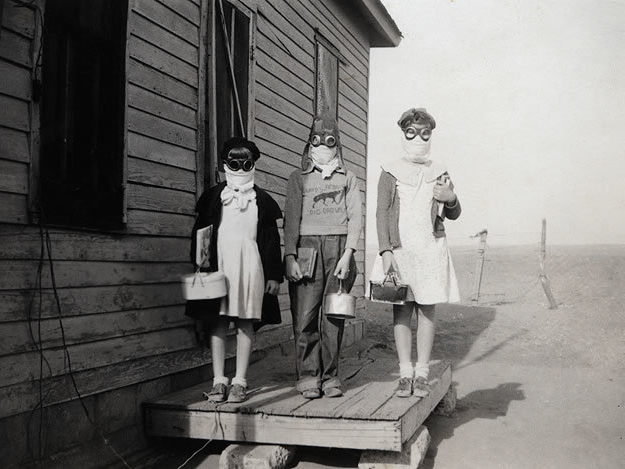
Some 7,000 people died from “dust pneumonia” during the Dust Bowl era. People wore masks to keep the dust our of their lungs. Children going to school might wear goggles and masks. Today we have face shields and masks.

During the Dust Bowl Era farmers were told to kill snakes and hang them (belly up) to attract rain. So-called experts used balloons to lift dynamite into the sky. They claimed the explosions “agitated” the atmosphere and caused rain to fall. Today we have people espousing untested drugs, UV light, and injecting disinfectants to prevent Covid-19. There are those who falsely claim covid vaccines alter your DNA, cause infertility, and contain microchips. The situation is different but similarities exist.

We survived the dust bowl and we will survive Covid-19 too. We must be resilient.

Posted in Presentations | Comments Off on Resilience: Lessons Learned

Career and Technical Education: A History

Hopefully, things will be back to normal next year and I can work with the ECMC Foundation Fellows (emerging leaders in career and technical education) in person instead of via ZOOM. However, we had a good conversation about the history of career and technical education in April. I always like it when some of the participants contact me for more information.

Posted in Presentations | Comments Off on Career and Technical Education: A History

The History of Tomato Clubs

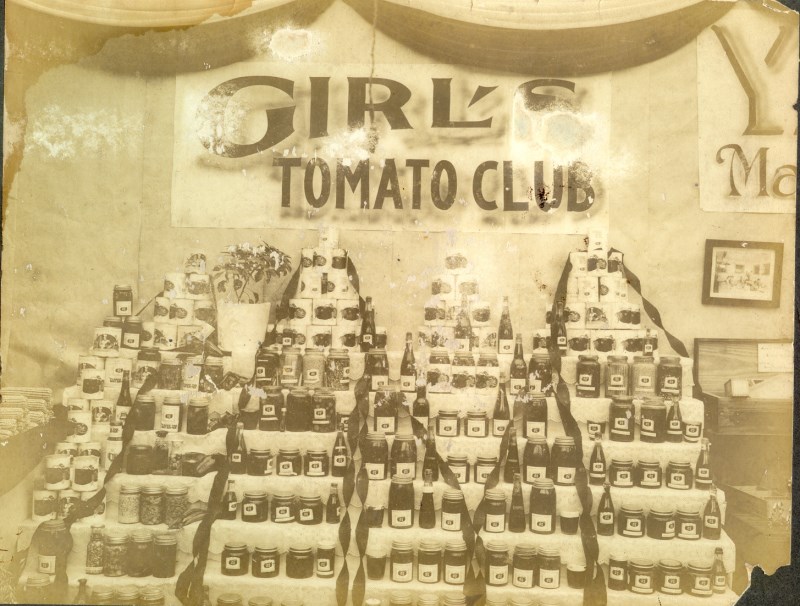
Patrons of the Morton Grove, Illinois Public Library learned more about tomato clubs via a ZOOM presentation today. In preparing the presentation I learned that an Illinois representative to the U.S. Congress offered prizes to corn clubs and tomato clubs in his district in 1916. Winning clubs received a trip to St. Louis. Second place clubs got to go to Springfield, Illinois. I also learned there was a huge debate in 1929 in the U. S. Senate about imposing a 3 cent a pound tariff on imported tomatoes. A senator from Alabama was arguing for the tariff to “protect the girls’ tomato clubs.”

Posted in Presentations | Comments Off on The History of Tomato Clubs

Making a U-Turn

I enjoyed speaking to a group of agricultural education students at Texas State University via Zoom on Monday. The topic was the History and Development of Agricultural Education. I was asked to provide some thought-provoking discussion questions in advance. The two questions I submitted were:

  1. Why was agricultural education needed in the early 1900s?
  2. How is agricultural education different today than it was in Era 1 – the 1920s and 1930s?

In response to the second question, the immediate answer given by the students was that the audience for agricultural education in the early days were boys. Today it is for both boys and girls. Since the class was all female, I thought this was a good observation and validated the answer. There has been a major u-turn in the type of students in agricultural education today. The majority of the students are still male, but the majority of the FFA officers are female.

Posted in Presentations | Comments Off on Making a U-Turn